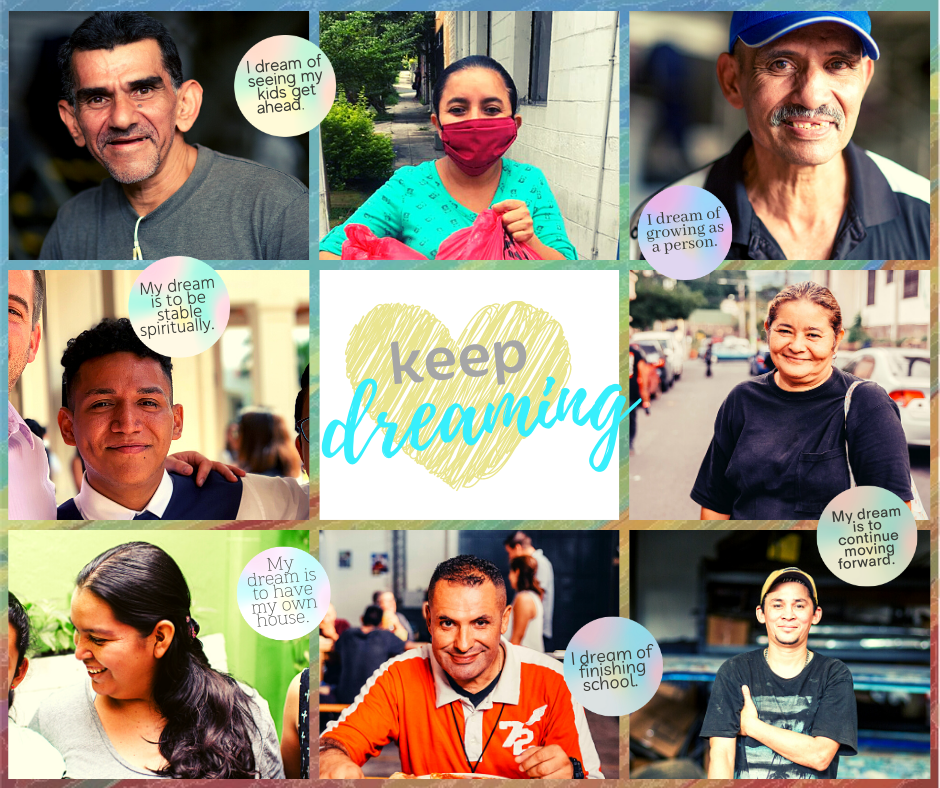
Our words matter. They have power. They can bring dignity and humanity into someone’s life. Or they can make someone feel rejected and shattered.
In our world today, people use words like weapons on the internet, or they shout them angrily in the street while protesting something they don’t like. Years of working with people who have been pushed down, marginalized, and rejected by so many have taught us how careful we need to be with our words.
June is Immigration Hertiage Month in the U.S. and you only have to scroll through social media for a few minutes to find a lot of words to describe immigrants. Some speak life and dignity and some tear people down. If we claim to follow Christ, we need to watch our language. Do we speak first out of our opinions, because we want to be heard, or we need to make a point? Or are we willing to put the person first, step into their world, and see them as Christ does?
As the world becomes divided because of words, perhaps we could take a moment to try to understand the terms. El Salvador has a long history of migration from here to the U.S. Many Salvadorans now call the U.S. their home. Some have left for new economic opportunities, others have fled as refugees in fear. Some are undocumented and some have dual citizenship.
All are people, made in God’s image.
We thought it may be helpful to share some terms that are discussed in the media, in politics, and in everyday conversations. These are terms that have shaped the lives of many people from Central America, from El Salvador, for decades. Take a moment to read along…
An immigrant is someone who moves from one country to another county for the purpose of beginning a new life there. They go to put down roots, settle, invest, and make that new place their home.
A migrant is a person who is in the process of moving from one place to another. This might happen within someone’s own country. It could also happen as someone crosses borders from their own country to another. This could be a permanent situation or merely a temporary one.
Someone who is forced to flee their home country because they are afraid of harm or persecution due to their religious beliefs, ethnicity, alliance with a social group or political opinions is called a refugee. A person who is a refugee faces a real and established threat of war or violence.
An asylum seeker is someone who has fled their home country and when they arrive in the country where they wish to stay permanently, they claim fear of returning back home because of violence or persecution. This fear is due to their government’s unwillingness or inability to protect them.
Many Salvadorans in the U.S. and other countries have what is called Temporary Protected Status (T.P.S.). This is granted to someone who has received legal permission to live and work in the U.S.A. This is not a permanent status but is does protect someone from deportation if they cannot return to their home country because of safety issues.
Human smuggling is a crime against a state and involves the act of helping a person to illegally cross borders by facilitating transportation or false documentation. A human smuggler is known in the context of Mexico and Central America as a “coyote.” Human smuggling can turn into human trafficking when a vulnerable person begins to be exploited.
A different kind of crime is human trafficking. This involves elements of force, fraud and coercion used to exploit men, women, and children. People can be trafficked through forced labor, commercial sex or other forms of exploitation. It may or may not involve crossing international border but it is always a crime against a person and a violation of their rights.
These are some basic terms to help put into context some very complicated issues. Every case is different since every person is different. However, every person is created in the image of God and has value and dignity. All are in need of Him and His grace.
As we seek to serve others, we can also seek to understand their context so that we can be in a position to share Christ’s love and grace with those who need it and so that we can encourage our brothers and sisters in Christ.